

Introduction
Commercial aviation is one of the safest modes of travel, backed by strict safety standards and professional pilots. Yet, when an in-flight emergency occurs, it becomes a test of skill, teamwork, and precision. One such event — the United Airlines Flight UA770 Emergency Diversion — captured national attention and raised new discussions about safety preparedness and aircraft reliability.
- Introduction
- About United Airlines Flight UA770
- How the Emergency Began
- The Pilots’ Quick Decision
- Safe Landing at Denver International Airport
- Passenger Reactions and Real Experiences
- Investigation and Preliminary Findings
- Expert Opinion: How the Crew Saved the Day
- Understanding Diversions and Why They Matter
- Support and Care for Passengers
- Media and Public Reaction
- Lessons for the Aviation Industry
- What This Means for Future Travelers
- Conclusion
This detailed report explains what happened onboard, how the crew handled the crisis, and what lessons the aviation industry is drawing from it.
About United Airlines Flight UA770
United Airlines Flight UA770 was a scheduled passenger service operating from Los Angeles International Airport (LAX) to Boston Logan International Airport (BOS). The route, spanning across the United States, usually runs smoothly under United’s high safety standards.
On the day of the incident, the aircraft, a Boeing 737-900ER, took off as planned with over 170 passengers and crew. Weather conditions were clear, and the journey began like any other. But a few hours into the flight, the unexpected occurred — forcing the pilots to make a difficult yet lifesaving decision.
How the Emergency Began
Roughly two hours after departure, passengers started hearing unusual sounds from the aircraft’s right engine. Moments later, a loud “bang” echoed through the cabin, followed by strong vibrations.
The cockpit crew immediately assessed the situation, while flight attendants stayed composed, ensuring passengers remained calm. Within minutes, the pilots contacted air traffic control (ATC) and reported a possible engine malfunction.
Given the situation, the crew decided on an emergency diversion to Denver International Airport (DEN) — the nearest large airport with advanced emergency response facilities.
The Pilots’ Quick Decision
In aviation, every second matters. The decision by the Flight UA770 pilots to divert showed their exceptional training and focus.
They safely shut down the affected engine, balanced the aircraft, and began descending toward Denver. Throughout the process, they kept passengers informed in a calm and professional tone, reducing panic and maintaining order inside the cabin.
Experts later praised their actions, calling the diversion a model example of proper emergency handling in modern aviation.
Safe Landing at Denver International Airport
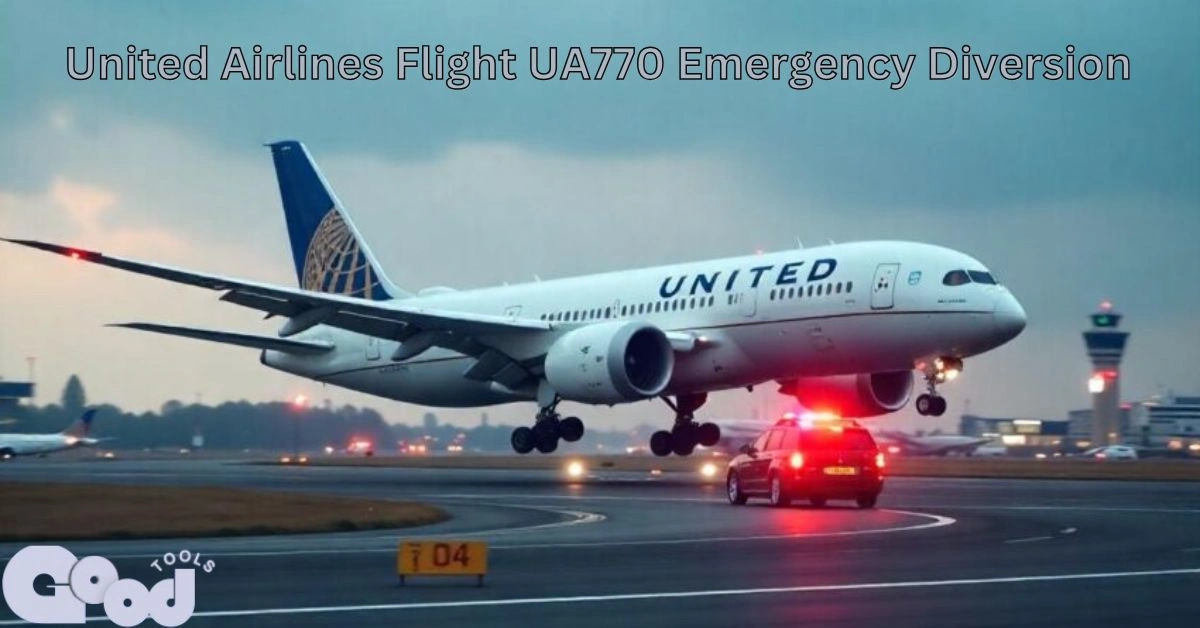
After nearly 25 tense minutes, the aircraft made a smooth landing at Denver International Airport. Emergency vehicles, including fire and rescue teams, were already waiting near the runway.
The aircraft taxied safely to a remote stand where engineers and firefighters inspected it immediately. Thankfully, no injuries were reported among passengers or crew.
United Airlines quickly arranged meals, accommodation, and alternate flights for those continuing to Boston. Passengers later shared that the crew’s professionalism helped them stay calm through the ordeal.
Passenger Reactions and Real Experiences
Travelers onboard shared their experiences once safely on the ground. Many described the initial noise as frightening but commended the crew’s behavior and United Airlines’ response.
One passenger wrote online:
“It was scary for a moment, but the pilots and flight attendants were incredible. They kept everyone calm and informed.”
Social media soon filled with hashtags like #UA770 and #UnitedAirlines, with thousands of people praising how efficiently the situation was managed.
The airline’s transparent communication and quick support left a positive impression — a factor that often influences customer trust more than the incident itself.
Investigation and Preliminary Findings
After the United Airlines Flight UA770 Emergency Diversion, both United Airlines and the Federal Aviation Administration (FAA) began a detailed investigation to determine what caused the issue.
Early inspections pointed to a mechanical fault in the right engine, possibly related to a component failure or oil pressure irregularity. The investigation team is also reviewing data from the flight data recorder (FDR) and cockpit voice recorder (CVR) to verify the exact sequence of events.
United Airlines reaffirmed its commitment to safety, emphasizing that all of its aircraft undergo regular maintenance and comprehensive checks before each flight.
Expert Opinion: How the Crew Saved the Day
According to aviation safety expert Captain Robert Miles, this incident proved how proper training saves lives:
“Modern planes are incredibly safe, but what really matters is how the crew reacts when things go wrong. The UA770 crew made every right decision — they followed the book, kept passengers safe, and landed without injury. That’s exactly what we train for.”
This expert analysis highlights how experience and training combine with advanced aircraft systems to prevent accidents.
Understanding Diversions and Why They Matter
Diversions may seem alarming to passengers, but they are an essential part of aviation safety. Pilots choose to divert when there’s any threat to flight stability, passenger health, or mechanical integrity.
In the case of Flight UA770, the decision was based on:
- Proximity: Denver International was within safe distance for a one-engine landing.
- Facilities: The airport has advanced emergency and maintenance teams on standby.
- Weather: Clear skies and calm winds allowed a safe descent.
- Runway Length: Long enough to accommodate the aircraft with a failed engine.
By following these protocols, pilots ensure that every decision prioritizes human life and aircraft safety over schedules or delays.
Support and Care for Passengers
After landing, United Airlines demonstrated strong crisis management and customer care.
Passengers were guided off the aircraft smoothly and escorted to the terminal. Within hours, United provided meals, hotel stays, and rebooking options for connecting flights. The airline also reached out to passengers with follow-up communication, ensuring emotional and psychological support where needed.
This prompt action reflects United’s long-standing reputation for maintaining high service standards during emergencies.
Media and Public Reaction
The United Airlines Flight UA770 Emergency Diversion quickly became headline news. Media outlets highlighted how efficiently the emergency was handled. Unlike some incidents that draw criticism, public sentiment here was largely positive — focused on the professionalism and composure of the crew.
Flight tracking websites and aviation blogs analyzed the descent path and data, noting that the flight’s behavior matched standard diversion procedures.
The public conversation also reinforced how far aviation safety has come — today’s aircraft and crews can manage emergencies far better than ever before.
Lessons for the Aviation Industry
Every incident contributes valuable lessons for airlines, engineers, and regulators. The UA770 diversion offers several takeaways:
- Rigorous Maintenance: Constant inspection and testing of engines prevent small issues from escalating.
- Crew Preparedness: Continuous emergency training keeps flight teams ready for any situation.
- Crisis Communication: Honest, calm communication from the crew can make passengers feel safe.
- Infrastructure Strength: Airports like Denver, designed for large-scale emergencies, play a vital role.
- Passenger Cooperation: Listening to crew instructions is crucial during any emergency.
The aviation industry often uses such real-world cases to further enhance safety protocols worldwide.
What This Means for Future Travelers
While incidents like this can be unsettling, they also prove how resilient modern aviation systems are. Airplanes are built to operate safely even if one engine fails. Diversion procedures, emergency training, and strict regulations make commercial flying one of the safest experiences available.
For passengers, this event is a reminder to stay calm, trust the crew, and follow instructions during unexpected situations. Behind every flight, thousands of safety checks and professional standards work silently to protect everyone onboard.
Conclusion
The United Airlines Flight UA770 Emergency Diversion stands as a real-world example of professionalism, training, and modern engineering working together under pressure.
What could have been a tragedy ended with every passenger safe — thanks to quick thinking, teamwork, and decades of safety advancement. While investigators continue to identify the technical cause, the incident reaffirmed confidence in United Airlines and the aviation industry as a whole.
For readers, this story offers reassurance: when challenges strike mid-air, today’s pilots, crews, and aircraft systems are ready to respond with unmatched skill and precision.