

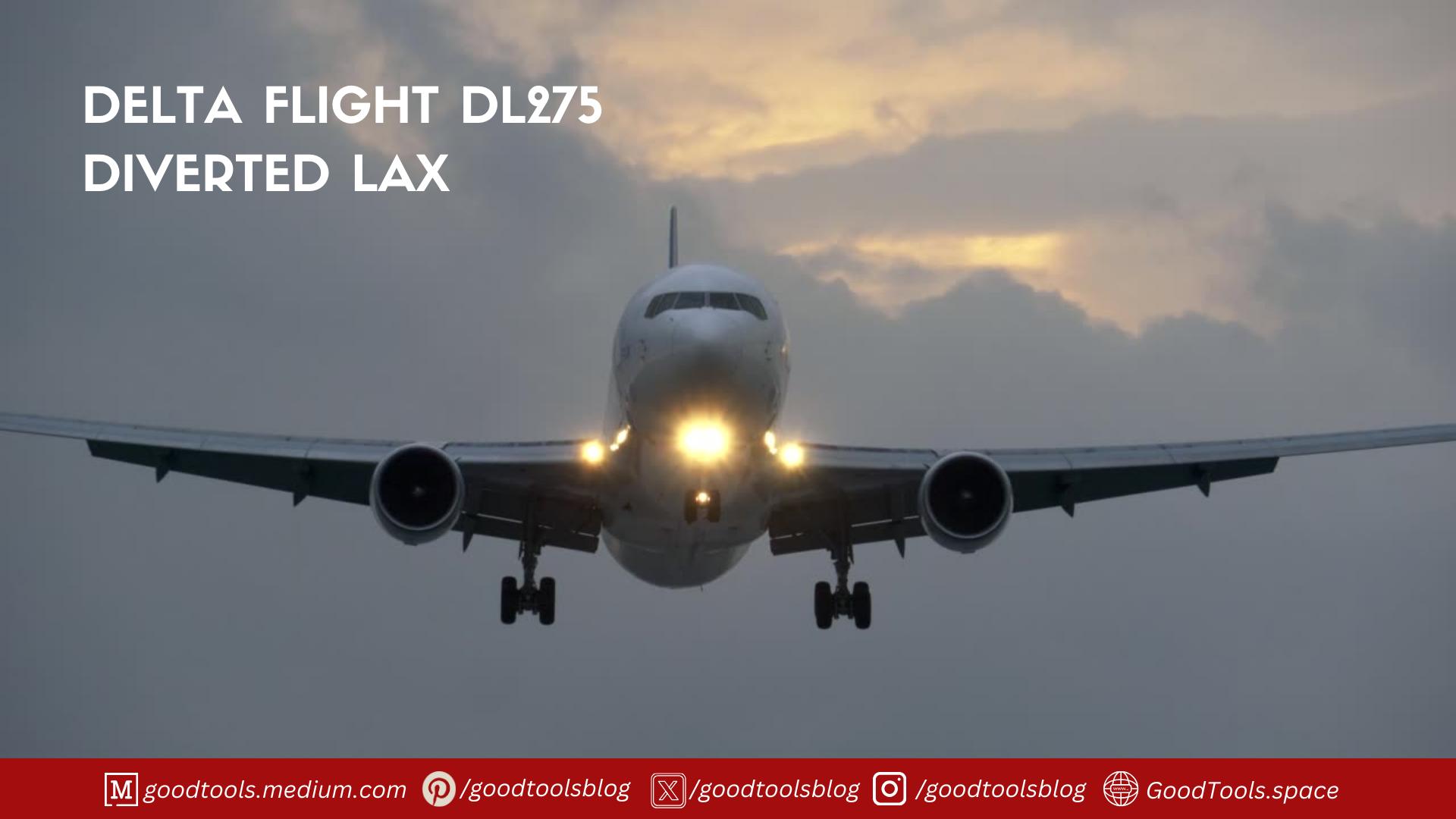
Imagine being on a long flight, and suddenly the captain says the plane has to land somewhere else. That’s what happened to everyone on Delta Flight DL275. It was supposed to fly from Detroit to Tokyo, but had to stop early at Los Angeles International Airport (LAX). If you’ve ever wondered what it’s like when a flight has to change plans, this story explains it simply and clearly.
What Happened on Delta Flight DL275?
Delta Flight DL275 was a big plane flying between Detroit (DTW) and Tokyo (HND). There were 287 people—passengers and crew—on board. During the trip, something important broke: the system that keeps ice from forming on the engines stopped working. When this system fails, it can be dangerous, so the pilots decided it was safest to land at LAX.
Quick Facts:
- Flight: DL275
- Plane: Airbus A350-900 (N508DN)
- Engines: Rolls-Royce Trent XWB
- Started in: Detroit (DTW)
- Supposed to go to: Tokyo (HND)
- Landed in: Los Angeles (LAX)
How Things Happened: Timeline
- 3:53 PM: Plane leaves Detroit.
- 4:45 PM: Plane is flying high at 38,000 feet.
- 9:15 PM: Flying across Alaska, where it’s super cold.
- 12:12 AM: Warning light about engine anti-ice system turns on.
- 12:34 AM: The airflow from the anti-ice system drops a lot.
- 12:45 AM: Captain calls for emergency help, just in case.
- 1:08 AM: Plane lands safely at LAX.
What Was the Main Problem?
The engine’s anti-ice system, which keeps the engine from freezing, completely failed. Normally, the system moves warm air around important engine parts. First, the heat dropped, then less air moved, and finally the system quit working altogether. Ice on the engine can lead to serious problems, so the pilots followed the rules and landed as soon as possible at a big airport.
Why Choose LAX?
There are a few smart reasons why they landed at LAX:
- Fixing the Plane: Lots of Delta people and parts are at LAX to help fix planes quickly.
- Rebooking: There are many flights from LAX, making it easier to help people keep traveling to Tokyo.
- Help for Passengers: So many hotels, transport options, and places for people to wait at LAX.
- Ready for Emergencies: LAX has experts for all kinds of emergency landings.
What Did Passengers Go Through?
When the pilot shared the news, some people felt worried, but the crew calmly explained the situation. The flight attendants kept everyone updated and tried to make people comfortable.
Some real quotes:
- David Park (Business): “We got updates every half hour, so I always knew what was happening.”
- Jennifer Walsh (Economy): “The crew gave out snacks and checked on older passengers. They made us feel better.”
- Dr. Robert Kim (Delta One): “As a doctor, it was good to see how quickly they checked on anyone feeling sick.”
- Amina Patel (Travelling with Kids): “At first my kids were scared, but a flight attendant brought them coloring books and helped keep them happy.”
- James Ortiz (Flies Often): “I was surprised but impressed by how friendly the staff was after we landed. They got us transport to hotels right away.”
- Linda Cho (Solo Traveler): “I’ll never forget how kind everyone was. The crew handled everything with care.”
After landing, Delta’s staff helped everyone get off the plane, find their bags, and arranged help or medical care if anyone needed it.
How Delta Helped Everyone
Because the airline was at fault for the problem, they offered:
- Free hotel rooms (up to two nights) close to the airport.
- Money for food ($75 per day for each person).
- Easy rebooking on the next flights to Tokyo.
- 25,000 bonus miles to each passenger’s account.
If weather causes a problem, airlines mostly help passengers get a new flight. But if the plane’s own system is at fault, they should also arrange meals and hotels.
How Much Did It All Cost?
Changing a flight like this is expensive. For Delta, this one diversion cost about $5.9 million.
- Direct costs: $2.3 million (mainly extra fuel, fixing the plane, and taking care of people).
- Other hidden costs: $3.6 million (like missed flights and changes to other travel plans).
Anti-ice system problems are very rare—less than 0.2% of all technical issues on flights. Usually, a diversion costs between $25,000 and $600,000, but for big international flights like this, it can be much more.
Could This Have Been Prevented?
Airlines are starting to use “predictive maintenance”—special computer systems that spot small problems early using sensors on the plane. If Delta had this in place, they might have seen the issue before takeoff and fixed it for around $31,500, stopping the need to divert. Big airlines like United and Lufthansa do this to stop problems before they happen.
Conclusion: What We Learned
This story shows just how important safety is on every flight. Even though the anti-ice system broke, the pilots and crew worked as a team, and everyone landed safely. Delta took care of passengers with hotels, food, and help getting to their next flight. The whole experience made travelers feel cared for, and showed how quick action and good planning keep flying safe for everyone.
Every step—quick decision-making, clear updates, and looking after passengers—shows why most people trust flying to get them where they need to go. Each safe landing, even during a diversion, is proof that these systems work.
